News
Smart Bandages Market Set to Transform Wound Care with Real-Time Monitoring and Precision Healing
By Headlines Team
January 6, 2026
Field Notes
Market Overview and Scope
The smart bandages market represents a paradigm shift in wound care, moving from passive dressings to intelligent, responsive healing solutions. Valued at USD 961.16 million in 2025E, the market is projected to reach USD 2,362.85 million by 2033, expanding at a CAGR of 11.9% during 2026–2033. This growth trajectory reflects the rising burden of chronic wounds, particularly among diabetic and aging populations, and the increasing adoption of digital health technologies across healthcare systems.
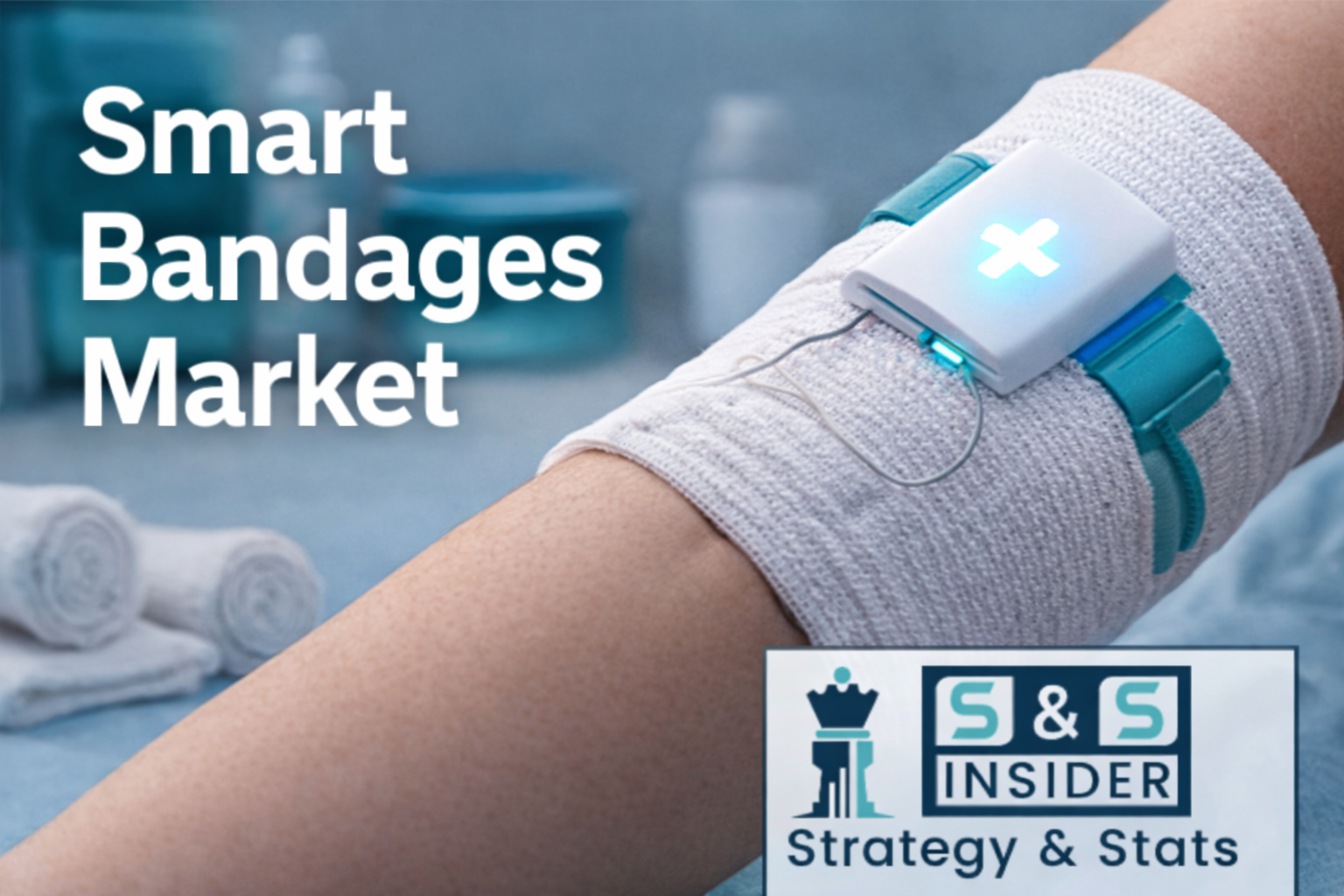
Smart bandages integrate advanced sensors, flexible electronics, and therapeutic delivery systems directly into wound dressings. These capabilities allow clinicians to track healing progress in real time, detect early signs of infection, and personalize treatment protocols. As healthcare systems focus on improving outcomes while reducing long-term treatment costs, smart bandages are emerging as a critical component of next-generation wound management.
Chronic Wounds and the Rising Need for Advanced Care
Chronic wounds remain a major global healthcare challenge, especially diabetic ulcers, pressure ulcers, and post-surgical wounds. Data from U.S. healthcare authorities highlight the severity of this issue, with approximately 160,000 diabetes-related amputations reported among hospitalized adults in 2020. Treatment of chronic wounds imposed an estimated USD 22.5 billion burden on Medicare alone in 2019, underlining the economic strain of conventional wound care approaches.
Survival rates associated with chronic wounds are notably low, with five-year survival estimated at around 70%, a figure lower than that of many cancers. These statistics emphasize the urgency for proactive wound management solutions. Smart bandages address this need by enabling continuous monitoring and early intervention, reducing complications, hospital readmissions, and long-term care costs.
Technology Innovation Reshaping Wound Management
Smart bandages are gaining momentum due to rapid advancements in sensor technology, material science, and wireless communication. Embedded sensors measure critical wound parameters such as temperature, pH levels, and moisture content, providing actionable insights into wound status. These data points support timely clinical decisions and reduce reliance on frequent manual inspections.
Government and defense-backed research initiatives are also accelerating innovation. Funding programs supporting bioelectronics and wearable medical devices have strengthened R&D pipelines, enabling the development of adaptive systems such as modular electrotherapy platforms. These systems deliver targeted therapy directly at the wound site, improving healing efficiency and patient comfort.
The integration of smart bandages with telemedicine platforms further enhances their value proposition, enabling remote monitoring and follow-up care. This capability is particularly important for home healthcare settings and for patients with limited access to specialized wound care centers.
U.S. Market Performance and Growth Drivers
The U.S. smart bandages market was valued at USD 385.40 million in 2025 and is projected to reach USD 955.60 million by 2033, growing at a CAGR of 11.3%. Growth is fueled by a high prevalence of diabetes, burns, and chronic wounds, coupled with strong investments in digital health and wearable medical technologies.
Hospitals and home healthcare providers in the U.S. are increasingly adopting sensor-enabled bandages to improve patient outcomes and reduce length of stay. Rising healthcare expenditure, supportive reimbursement frameworks, and a strong innovation ecosystem further reinforce the market’s expansion during the forecast period.
Key Market Drivers Supporting Expansion
The global smart bandages market is driven by three primary forces: chronic disease prevalence, technological advancement, and personalized healthcare demand. Rising rates of diabetes, obesity, and cardiovascular diseases continue to expand the chronic wound patient population. Aging demographics further amplify demand for advanced wound care solutions.
Technological innovation plays a central role, with improvements in biosensors, flexible substrates, and wireless data transmission making smart bandages more reliable and affordable. At the same time, the shift toward precision medicine supports adoption of tailored bandage solutions that adapt to individual patient needs and wound characteristics.
Performance Variability as a Market Restraint
Despite strong growth prospects, variability in sensor performance remains a critical challenge. Factors such as sensor drift, moisture interference, temperature fluctuations, and calibration inconsistencies can affect data accuracy. Variations in wound environments and patient movement further complicate reliable measurement.
Ensuring stable, reproducible, and clinically validated performance is essential for building clinician trust and supporting large-scale adoption. Continued investment in material engineering, calibration protocols, and clinical validation studies will be key to overcoming these limitations.
Product, Application, and Material Insights
Electroactive smart bandages accounted for the largest share in 2025, capturing 27.8% of the market due to their ability to accelerate healing through controlled electrical stimulation. Sensor-based smart bandages are expected to record the fastest growth as demand for precision wound monitoring increases.
Chronic wound management dominated application demand with a 29.7% revenue share in 2025, supported by rising cases of diabetic foot ulcers and pressure ulcers. Sports injuries are projected to grow rapidly as awareness of advanced recovery solutions increases.
From a material perspective, graphene led the market with a 47.1% share, driven by its exceptional strength, flexibility, and conductivity. Synthetic fibers are anticipated to grow at a faster pace due to their cost-effectiveness and lightweight properties.
Regional Market Dynamics
North America led the global smart bandages market with a 42.8% share in 2025, supported by high healthcare spending, advanced infrastructure, and a large chronic wound population. Asia Pacific is expected to witness the highest CAGR during the forecast period, driven by improving healthcare access, rising awareness, and economic growth.
Europe continues to benefit from strong reimbursement systems and digital health adoption, while Latin America and the Middle East & Africa are gradually emerging as growth markets due to infrastructure development and increasing focus on advanced wound care.
Key Players
3M, Johnson & Johnson, Medtronic, Smith & Nephew, Mölnlycke Health Care, ConvaTec, Coloplast, Baxter International, B. Braun Melsungen, Paul Hartmann, Lohmann & Rauscher, Medline Industries, Cardinal Health, Grapheal SAS, SteadySense GmbH, KOB GmbH, Nexlife, OSNovative Systems Inc., Xsensio SA, Redsense Medical AB
Future Outlook
The smart bandages market is poised for sustained expansion as healthcare systems prioritize proactive, data-driven wound care. Integration with artificial intelligence, telemedicine platforms, and personalized therapy delivery will further enhance clinical outcomes. As sensor accuracy improves and production costs decline, smart bandages are expected to transition from specialized applications to mainstream wound care solutions globally.
Conclusion
The smart bandages market is transforming wound care by combining real-time monitoring, targeted therapy, and personalized treatment approaches. Strong growth fundamentals, technological innovation, and rising chronic wound prevalence position the market for robust expansion through 2033. Continued collaboration between researchers, manufacturers, and healthcare providers will be critical to unlocking the full potential of smart bandages and improving patient outcomes worldwide.