BlackBerry Secure Communications CVEs: Critical Vulnerability Insights
By adminDev2
November 26, 2026
Field Notes

Could a single flaw in BlackBerry Secure Communications let attackers bypass enterprise protections?
BlackBerry Secure Communications isn’t one program, it’s a chain of trust: device, app container, MDS/gateway relays, identity service, messaging backend, and the admin console.
Each boundary can host CVEs that chain together into a real-world exploit.
This post breaks down the most critical CVEs, shows how those flaws become exploitable across the stack, and gives practical steps for admins: identify affected builds, back up configs, apply patches, and audit traffic and permissions.
How BlackBerry Secure Communication Flaws Become Exploitable
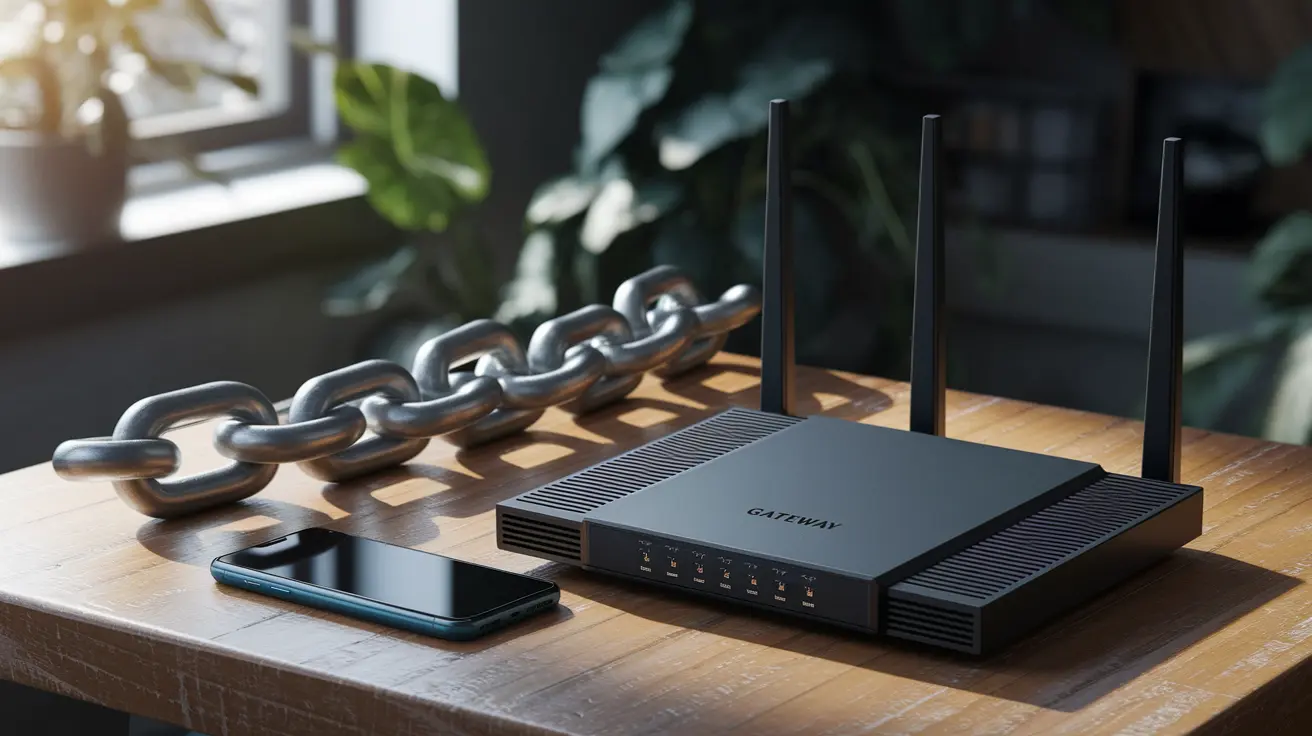
A secure communication environment isn’t one piece of software, it’s a chain of trust boundaries. The device itself, the application container running on it, the MDS (Mobile Data System) or gateway relaying traffic, the identity service confirming who’s who, the messaging backend handling content, and the administrative console managing all of it. Each boundary is a place where something can go wrong. [Security assessment of BlackBerry applications](https://google.com/goto?url=CAESqwEBxCJF1xUI7LBCWdpI7j7NlaimqIKmsQTXgEm0A4a6
Final Words
We built a verified CVE register that maps CVE IDs, CVSS v3.x vectors, affected versions, exploit evidence, and vendor advisories for UEM, Dynamics, AtHoc, BBM Enterprise, and legacy BES.
We explained how flaws become exploitable, how to test safely, and how to prioritize by CVSS plus environmental exposure. We also covered patching, hardening, monitoring, and incident-response steps.
For teams tracking blackberry secure communications vulnerabilities and CVEs, use the register, validate product mappings, back up configs, and apply patches or compensating controls. That keeps communications resilient.
FAQ
Q: What should a verified BlackBerry CVE register include?
A: A verified BlackBerry CVE register should include CVE ID, CVSS v3.x score and vector, affected product and version ranges, weakness and attack prerequisites, exploit evidence, fixed version, workaround, disclosure date, and advisory references. Last verified 2026-11-26.
Q: Why can’t the BlackBerry Featured Insights page be used as a CVE inventory?
A: The BlackBerry Featured Insights page cannot be used as a CVE inventory because it lacks CVE IDs, CVSS vectors, affected-version ranges, patch details, exploit timelines, and formal vendor advisories needed for verification.
Q: How do I confirm a CVE actually affects a BlackBerry product?
A: To confirm a CVE affects a BlackBerry product, map the vulnerable component to vendor documentation, an advisory, CPE strings, an SBOM, or an asset inventory and verify the same record in a recognised vulnerability database.
Q: When should QNX CVEs be included in a BlackBerry register?
A: QNX CVEs should be included only when product documentation, a software bill of materials, or an asset inventory proves the vulnerable QNX component is actually deployed in the assessed BlackBerry communication environment.
Q: How can BlackBerry secure-communication flaws become exploitable?
A: BlackBerry secure-communication flaws become exploitable when malformed input, weak authentication, memory corruption, or vulnerable dependencies cross trust boundaries between device, app container, gateway, identity service, or backend systems.
Q: What is a typical exploit chain against BlackBerry messaging systems?
A: A typical exploit chain begins with attacker access, discovery of a vulnerable endpoint, crafted input delivery, control-flow or authentication failure, privilege escalation, and ultimately access to messages or management functions.
Q: Which BlackBerry product families have distinct attack surfaces?
A: BlackBerry UEM/BES management, Dynamics app containers and SDKs, BBM Enterprise endpoints and key management, AtHoc emergency servers, and conditionally QNX components each present distinct exposed interfaces and typical weaknesses.
Q: How should I prioritise BlackBerry CVEs for my enterprise?
A: Prioritise BlackBerry CVEs by CVSS v3.x base score plus exploit evidence, external exposure, affected asset count, authentication requirements, business impact, support status, and operational importance to produce environment-specific risk tiers.
Q: What evidence increases urgency for a BlackBerry vulnerability?
A: Urgency increases with public proof-of-concept, observed exploitation, external exposure, weaponised code, or active targeting; always label evidence clearly as theoretical, proof-of-concept, weaponised, or observed-in-the-wild.
Q: How do I safely test suspected BlackBerry application vulnerabilities?
A: Safely test suspected BlackBerry application vulnerabilities with written permission, isolated networks, synthetic accounts, JDK/JDE and simulator environments, Burp Suite on port 8888, configured MDS proxy, and a documented restoration plan.
Q: What immediate controls help until a vendor patch is available?
A: Immediate controls until a patch: network segmentation, multi-factor authentication, disable legacy or unused services, WAF/IDS rules, strict allowlisting, EDR/central telemetry, and removing internet exposure for affected assets.
Q: How should I monitor BlackBerry advisories and CVE databases?
A: Monitor BlackBerry advisories and CVE databases by querying vendor, product family, year, and CPE strings; track advisory revision dates, CVE publication, patch releases, and exploit reports via automated alerts and preserved timestamps.
Q: What are the first steps for incident response in a BlackBerry environment?
A: First incident-response steps are validate the alert, open an incident record, assign an incident owner, apply the CVE-derived priority, preserve logs and volatile evidence, contain affected systems, investigate scope, and notify stakeholders.
Q: When does an old CVE remain operationally relevant?
A: An old CVE remains operationally relevant when the affected service or specific vulnerable version is still deployed and reachable in your environment, not merely because the CVE exists historically.
Q: How should unsupported BES and legacy devices be handled?
A: Unsupported BES servers and legacy devices should be isolated from networks, removed from internet exposure, strict allowlisting applied, credentials rotated, privileges reduced, and a time-bound migration plan created.