News
Tire Tread and Pressure Checks Before a Long Highway Drive
By Full Editorial
November 17, 2026
Field Notes
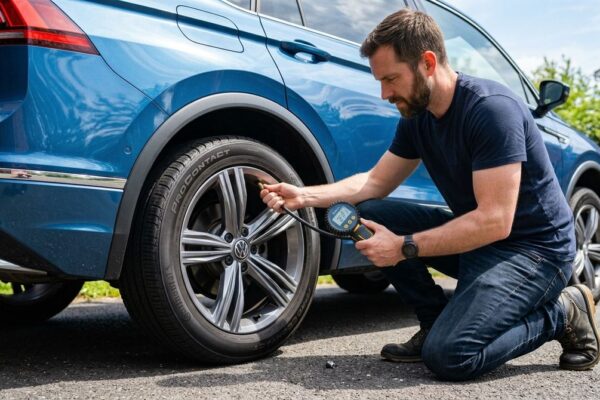
Most drivers check the oil before a long trip and forget the tires entirely. Tires carry the whole weight of the car, and they are the only parts in contact with the road at every moment of the journey. A few minutes spent on tread and pressure before departure can prevent a roadside stop that nobody planned for, and it costs far less than the tow that follows.
This article gives a general overview of simple tire checks that any driver can do at home or at a gas station. It covers the coin test, pressure readings, the spare tire, and the signs of uneven wear. It does not replace a visit to a qualified mechanic, and drivers with doubts about a tire should book a professional inspection before they set off on a long route.
The Coin Test and What It Shows
Place a coin with the head facing down into one of the main tread grooves, and look at how much of the head is hidden. If the top of the head is covered, the tread is still deep enough for most normal driving. If the whole head can be seen, the tire is worn and should be inspected before the trip begins.
Readers may also want to visit All The Rage Faces. Repeat the test across the width of each tire, since wear is often uneven from edge to edge. Note any spot that looks different from the rest and mention it to your mechanic. A single worn patch can be the first sign of a problem that is easy to fix early.
Pressure Checks in Cold Parking Lots
Check pressure when the tires are cold, which means before the car has been driven far. Heat from driving raises the reading, so a number taken after a long drive can mislead you. Use a reliable gauge and compare the reading with the figure printed on the sticker inside the driver’s door frame.
You can also visit Colourpop for more reading. Check all four tires plus the spare, because a flat spare is a common surprise on a long journey. Adjust the pressure in small steps and check again, rather than filling the tire all at once. Keep a small gauge in the glove box so the check is easy to repeat on the road.
Spare Tire and Jack Basics
Find the spare, the jack, and the wheel wrench before you leave the driveway. Many cars store these tools under the floor of the trunk, and the location is often easy to forget. Read the owner’s manual page on changing a tire and keep it with the car papers so it is available when needed.
For a related read on this site, see Caring for Wool Sweaters When Closet Space Is Tight. Practice the change in a quiet place if you have never done one before, and make sure the car is parked on a flat surface with the handbrake set. A calm practice session is far better than a first attempt on the shoulder of a busy road, where traffic can be fast and loud.
Noticing Wear Patterns Early
Uneven wear points to alignment, suspension, or inflation problems. Wear on the inside or outside edge often means the wheels are not sitting square, while a worn center usually points to over inflation. Bring these patterns to a mechanic so the root cause is found rather than hidden by a new tire.
Look for bulges, cracks in the sidewall, or objects stuck in the tread. Any of these signs calls for a closer look before the trip. Small problems found at home are much cheaper to handle than the same problem found at a highway rest stop. A quick walk around the car each morning is often enough to spot them.
Packing the Checklist in the Glove Box
Write a short checklist on an index card: tread test, pressure reading, spare check, tools present, and gauge packed. Keep the card in the glove box so it can be used before every long journey. Review the card after each trip to note anything that needs attention at the next service.
A short routine is easy to follow when the car is already loaded and the schedule is tight. A quick check of the tires can take less time than finding the right snack for the road. That small habit keeps the drive smooth from start to finish, and it gives you peace of mind on the longest stretches.