Misc
Moissanite vs Diamond: Which Is Right for You?
By Headlines Team
August 12, 2026
Field Notes
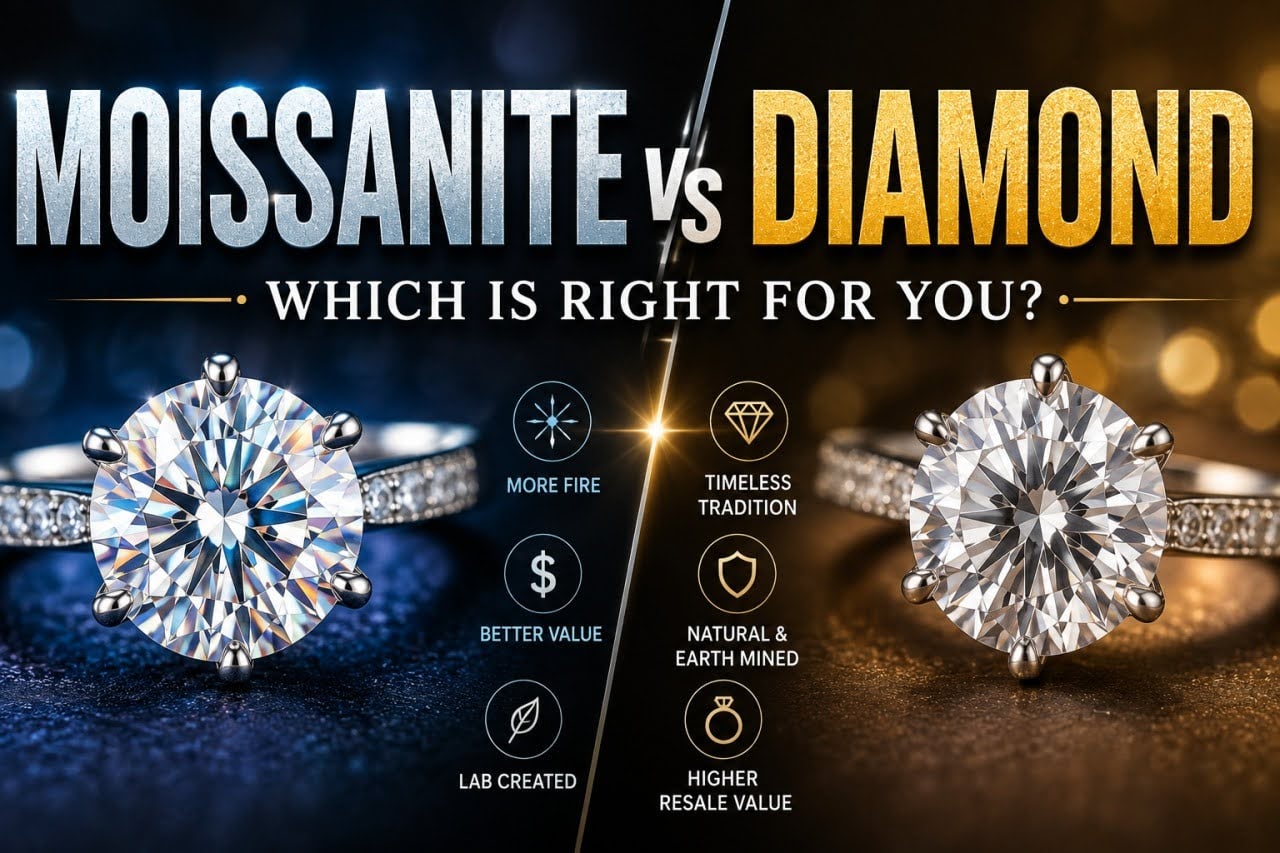
Choosing a gemstone for an engagement ring or another meaningful piece of jewelry is a highly personal decision. Diamonds have traditionally dominated the fine jewelry market, but moissanite has become a popular alternative for buyers who want impressive brilliance, durability, and a larger appearance for their budget.
The moissanite vs diamond decision isn’t simply about choosing the more expensive stone. Each gemstone has distinct characteristics that affect its appearance, durability, price, rarity, and long-term appeal.
Understanding those differences can help you choose the stone that best matches your priorities.
What Is a Diamond?
Diamonds are naturally occurring gemstones composed of carbon that forms under extreme heat and pressure. Natural diamonds used in jewelry are mined, cut, and polished before reaching the market.
Lab-grown diamonds are also widely available. They have essentially the same chemical composition and crystal structure as natural diamonds but are created in controlled laboratory environments.
Diamonds are prized for their:
- Exceptional hardness
- Brilliant appearance
- Long history in fine jewelry
- Wide variety of cuts
- Cultural association with engagement rings
For many buyers, the tradition and symbolism associated with diamonds remain important parts of their appeal.
What Is Moissanite?
Moissanite is a gemstone composed of silicon carbide. Naturally occurring moissanite is extremely rare, so the stones used in modern jewelry are generally created in laboratories.
Moissanite is known for:
- Exceptional brilliance
- Strong durability
- High resistance to scratching
- Distinctive fire
- More accessible pricing compared with many diamonds
Its combination of beauty and practicality has made it especially popular for engagement rings.
Moissanite vs Diamond: The Biggest Differences
When comparing moissanite vs diamond, the stones can appear similar at first glance, but they’re different gemstones with different optical and physical properties.
The most important differences involve:
- Brilliance
- Fire
- Hardness
- Color appearance
- Price
- Rarity
- Traditional significance
Neither gemstone is automatically the right choice for everyone. The better option depends on what you value most.
Which Stone Sparkles More?
Both gemstones sparkle beautifully, but they don’t produce exactly the same visual effect.
Moissanite has strong brilliance and tends to produce more noticeable rainbow-colored flashes, commonly referred to as fire.
Diamonds typically display a combination of white brilliance, colored fire, and contrast patterns influenced by the quality of the cut.
Some buyers love moissanite’s dramatic sparkle, while others prefer the familiar optical appearance of a well-cut diamond.
Which Is More Durable?
Both stones are highly suitable for everyday jewelry.
Diamond ranks 10 on the Mohs scale of hardness, making it the hardest naturally occurring mineral.
Moissanite is also exceptionally hard, typically ranking around 9.25 on the Mohs scale.
That makes both gemstones resistant to everyday scratching and suitable for frequently worn pieces such as engagement rings.
Hardness isn’t the same thing as complete resistance to damage, however. Any gemstone can potentially chip or suffer damage under certain conditions.
How Does Color Compare?
Diamonds are available across a broad spectrum of colors.
Traditional colorless diamonds are often evaluated using established grading systems that consider how much visible body color the stone displays.
Modern moissanite is also available in stones designed to appear colorless or near-colorless.
However, because diamonds and moissanite interact with light differently, they may not look identical even when placed in similar settings.
Seeing both stones in person can be helpful if color appearance is especially important to you.
Which Is More Affordable?
Price is one of the biggest differences between the two gemstones.
Moissanite generally costs significantly less than a comparable-looking diamond, particularly as stone size increases.
This allows buyers to potentially choose:
- A larger center stone
- A more elaborate setting
- Additional accent stones
- A higher jewelry budget for other features
For shoppers who prioritize visual impact and size, moissanite can provide considerable flexibility.
Does Moissanite Look Like a Diamond?
Moissanite can resemble a diamond, especially to someone viewing the jewelry casually, but it shouldn’t be considered an imitation diamond.
Moissanite is its own gemstone.
Its optical characteristics are different, particularly when it comes to the colorful flashes it can produce under certain lighting conditions.
Buyers should choose moissanite because they appreciate its qualities rather than because they’re expecting it to behave exactly like a diamond.
What About Lab-Grown Diamonds?
The comparison becomes more interesting when lab-grown diamonds enter the conversation.
A lab-grown diamond is still a diamond in terms of its fundamental material and crystal structure. Moissanite is silicon carbide and therefore an entirely different gemstone.
For buyers comparing alternatives to natural diamonds, the decision may actually involve three options:
- Natural diamond
- Lab-grown diamond
- Moissanite
Each offers a different combination of price, origin, tradition, and personal appeal.
Which Looks Bigger?
Gemstones aren’t always compared purely by carat weight because different materials have different densities.
Moissanite is commonly marketed according to its approximate diamond-equivalent appearance or dimensions rather than relying exclusively on carat weight.
If having a visually larger center stone is important, moissanite can make it possible to achieve a dramatic look while staying within a more moderate budget.
Which Is Better for an Engagement Ring?
Both gemstones can be excellent choices for engagement rings.
A diamond may appeal to someone who values:
- Tradition
- Classic appearance
- Diamond symbolism
- Natural rarity when choosing a natural stone
- Established grading standards
Moissanite may appeal to someone who prioritizes:
- A larger visual presence
- Strong brilliance
- Durability
- Lower cost
- A non-diamond gemstone
The right choice depends on the person wearing the ring.
Consider the Ring Setting
The setting can dramatically influence how either gemstone looks.
Popular engagement ring styles include:
- Solitaire
- Halo
- Three-stone
- Pavé
- Bezel
- Vintage-inspired
- Hidden halo
A skilled jeweler can help match the gemstone, cut, and setting so the finished ring feels balanced.
Which Gemstone Cuts Look Best?
Both diamonds and moissanite are available in numerous shapes.
Popular options include:
- Round
- Oval
- Cushion
- Emerald
- Pear
- Radiant
- Princess
- Marquise
Round stones typically emphasize sparkle, while step cuts such as emerald cuts create a more geometric appearance.
Your preferred shape can influence how noticeable the visual differences between the gemstones are.
Think About Long-Term Style
Engagement rings are often worn for decades, so trends shouldn’t be the only factor influencing your decision.
Ask yourself:
- Will I still like this shape years from now?
- Do I prefer classic or contemporary jewelry?
- How much sparkle do I want?
- Is gemstone origin important to me?
- How important is center-stone size?
- What’s my comfortable budget?
Answering these questions can make the decision much easier.
See Both Stones in Person
Photos and videos can be useful, but they don’t always capture how gemstones behave under real-world lighting.
Whenever possible, compare moissanite and diamonds side by side.
Look at them under:
- Natural daylight
- Jewelry-store lighting
- Lower indoor lighting
- Different viewing angles
You may quickly discover that you strongly prefer one gemstone’s appearance.
Work With a Trusted Jeweler
Whether you’re considering a diamond or moissanite, professional guidance can make the buying process easier.
An experienced jeweler can help explain:
- Gemstone characteristics
- Stone dimensions
- Cut options
- Settings
- Metal choices
- Care requirements
- Budget considerations
More importantly, a reputable jeweler should help you understand what you’re buying without pressuring you toward the most expensive option.
FAQs
Is moissanite a fake diamond?
No. Moissanite is a distinct gemstone composed of silicon carbide. Although it can visually resemble a diamond, it has different physical and optical properties.
Is moissanite durable enough for everyday wear?
Yes. Moissanite is very hard and resistant to scratching, making it well suited to engagement rings and other jewelry worn frequently.
Does moissanite sparkle more than a diamond?
Moissanite can produce strong brilliance and particularly noticeable rainbow-colored fire. Diamonds produce their own distinctive combination of brilliance, fire, and contrast.
Is a lab-grown diamond the same as moissanite?
No. A lab-grown diamond has the fundamental chemical composition and crystal structure of a diamond. Moissanite is silicon carbide and is a different gemstone.
How should I decide between moissanite vs diamond?
When comparing moissanite vs diamond, consider your budget, preferred appearance, desired stone size, feelings about tradition, and how much you value the distinctive characteristics of each gemstone. Seeing both options in person is one of the best ways to determine which appeals to you more.
Final Thoughts
There isn’t one universal winner in the moissanite vs diamond debate. Diamonds offer exceptional hardness, a classic appearance, and a long tradition in engagement jewelry. Moissanite provides remarkable brilliance, excellent durability, and the opportunity to achieve a larger visual presence at a more accessible price.
The right gemstone is ultimately the one that fits your priorities and makes you excited to wear the finished piece. Compare both stones, establish a comfortable budget, consider the setting you love, and work with a trusted jeweler who can help you make an informed choice.