News
The Panel, Not the Moisture, Sizes Big Dryers
By Headlines Team
October 6, 2026
Field Notes
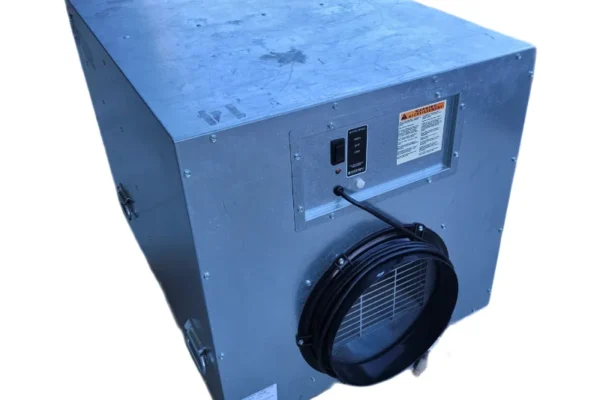
|
What this covers
|
When a large water loss needs serious drying capacity, the sizing conversation is almost always about the moisture: how much material is wet, how big the space is, how fast it has to dry. That is the right conversation, but it skips the constraint that ends more big-machine plans than moisture ever does.
The machine has to be powered. And in a lot of buildings, the biggest machine the moisture calls for is a machine the building cannot run.
The Constraint No Buying Guide Mentions
Electrical supply limits the size of equipment a building can run. That sentence appears in almost no guide to sizing a dehumidifier, and it is the one that decides the answer on a large residential loss.
A large desiccant unit may need a dedicated high-amperage circuit, and the biggest industrial machines often want three-phase power. That is fine in a commercial building wired for it. In a post-war residential building, it does not exist. Older residential panels cannot supply three-phase power, and frequently cannot spare the amperage a large single-phase machine wants either.
So the machine that was technically correct for the moisture load cannot be plugged in. The calculation was right and the building said no.
Why This Matters More Than the Moisture Number
A machine that cannot be powered cannot dry anything. That is the blunt version, and it reframes the whole sizing exercise.
On a large residential loss, the ceiling on equipment is usually not the moisture. The panel sets the ceiling on equipment in many buildings, and the moisture load the structure actually has may exceed what the available power can run. At that point, specifying the biggest machine the water calls for produces a unit sitting idle on the driveway because there is no circuit for it.
The useful question becomes not how big a machine the loss needs, but how much drying capacity the building can actually power, and how to get the needed capacity within that limit.
The Practical Answer: Several Smaller Machines
The way the trade solves this is not one big machine. Several mid-size units spread load across separate circuits, and on a residential large loss that is almost always the right configuration.
Three or four mid-size low grain refrigerant units, each on its own circuit, together deliver the drying the loss needs while staying inside what the panel can give. They also place drying capacity where the water is rather than in one corner, and if one trips a breaker, the job does not stop. The limiting factor is the panel, so the plan is built around the panel, not around a single large nameplate.
|
Building |
What it can power |
Sensible configuration |
|
Commercial, three-phase |
Large industrial units |
One or two big machines |
|
Modern residential |
Several standard circuits |
Several mid-size units |
|
Older residential |
Limited amperage, no three-phase |
Several small units, separate circuits |
The Check to Make Before Booking
All of this is avoidable with one check made before the machine is booked rather than after it arrives.
Look at the panel. Count the circuits that can be dedicated to drying equipment and note the amperage available. That tells you the real ceiling on capacity, and it turns the sizing conversation from a guess into an arithmetic problem: this much power, split this way, running these machines. A machine specified against the moisture alone, booked without that check, is the machine that gets delivered and cannot be run.
It takes a few minutes and it saves a wasted delivery.
The Los Angeles Version
Local building stock makes this the common case rather than the rare one. A large share of the city’s housing is older residential construction with the electrical supply those eras installed, which is well short of what the biggest drying machines want. A serious loss in one of those homes routinely needs more drying capacity than the panel can power in a single machine.
So the Los Angeles answer to a large residential loss is usually the several-mid-size-units approach, not the one-big-machine approach, and the building, not the water, is what decides it. Plan for the panel and the job runs. Plan for the moisture alone and the right machine shows up unable to turn on.
Renting to What the Building Can Run
Because the panel sets the real limit, the equipment plan should be built around it, which is a conversation worth having before anything is delivered. Industrial dehumidifier rental in Los Angeles done well starts with what power is available and on how many circuits, then matches the machines to that, rather than sending the biggest unit and discovering the panel cannot feed it. A supplier who asks about the electrical supply before the square footage is sizing to reality. The Los Angeles coverage is on the Google Business Profile.
What the Check Actually Involves
The power check before booking is quick and does not need an electrician for the basic version. Find the panel and read it. The main breaker shows the building’s total service, and the individual breakers show what is available on each circuit.
For drying equipment you are looking for circuits you can dedicate without tripping them, and how many amps each can give. A standard residential circuit handles a limited load, and a large machine can want more than one circuit’s worth on its own. Three-phase power, which the biggest industrial units often need, is obvious by its absence in a residential panel: it simply is not there. That tells you immediately whether a large single machine is even possible, before anyone quotes one.
The output of the check is a number: this many circuits, this many amps each, which sets the real drying capacity the building can run. That number, not the moisture load, is what the machine selection has to fit inside.
|
On the panel |
What it tells you |
|
The main breaker |
The building’s total service |
|
Spare dedicated circuits |
How many machines can run on their own circuit |
|
Three-phase present or not |
Whether one large unit is even possible |
What Happens When the Check Is Skipped
Skipping the check produces the same failure every time, and it is expensive in a quiet way. The machine is specified against the moisture, booked, delivered, and then will not run because there is no circuit for it. The delivery is wasted, the job has lost the time, and the right configuration, several smaller units, has to be arranged and delivered after the fact.
Worse is the version where someone forces it: running a large machine on a circuit that cannot really support it, which trips the breaker repeatedly, or overloads the circuit. A machine that trips overnight is found off in the morning, which costs a drying cycle, and an overloaded circuit is a hazard, not just an inconvenience. The check that takes a few minutes avoids both the wasted delivery and the forced-and-tripping machine.
Why the Several-Units Answer Is Usually Better Anyway
The panel constraint pushes toward several mid-size units, and it turns out that configuration has advantages beyond just fitting the power. Several units spread across separate circuits place drying capacity near each wet area rather than in one corner, so a spread-out loss dries evenly. They give redundancy, because one tripped unit slows the job rather than stopping it. And they are easier to move and place in a residential building with stairs and tight doorways.
So the power limit is not just a constraint to work around. On most residential losses it pushes toward a configuration that would often be the better choice anyway, which is why experienced operators reach for several mid-size units on a residential large loss even where a single big machine could, in theory, be powered.
Raising It Before the Machine Is Booked
The one step that avoids the wasted delivery is to make the power the first question, not the last. Before anything is booked, establish what the building can run: how many circuits can be dedicated to drying equipment and how many amps each can give, and whether three-phase power exists at all.
That number sets the ceiling, and the machine selection has to fit inside it. On a commercial building wired for it, a large single machine may be fine. On an older residential building, the answer is almost always several mid-size units on separate circuits, because that is what the panel can feed. Knowing which before booking means the right configuration is delivered the first time, rather than a large machine that arrives and cannot be plugged in.
So the rental conversation that avoids the problem starts with the panel, not the square footage. A supplier who asks what power is available, and on how many circuits, before quoting a machine is sizing to what the building can actually run. One who sends the biggest unit for the moisture load, without that question, is setting up the wasted delivery and the scramble to arrange several smaller units after the fact. The moisture says how much drying the job needs. The panel says how it is allowed to be delivered, and that is the question to settle first.
The Short Version
The biggest dehumidifier a loss calls for is often a machine the building cannot power. Check the panel before booking, count the circuits and the amperage, and on an older residential loss plan for several mid-size units on separate circuits. The moisture says how much drying you need. The panel says how you are allowed to deliver it.