Technology
How ERP Software Helps Small and Medium-Sized Businesses in Singapore
By Article Editor
October 31, 2026
Field Notes
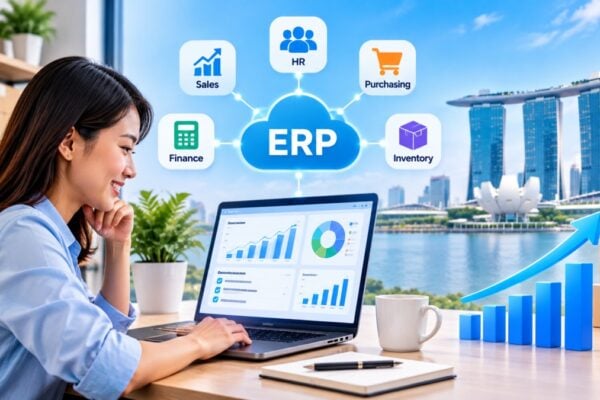
Small and medium-sized businesses (SMBs) in Singapore often manage multiple responsibilities with limited resources. From handling customer orders and tracking inventory to managing accounts and coordinating employees, daily operations can become difficult as a company expands.
Using separate software for every department may also create communication gaps and unnecessary manual work. ERP software offers a practical solution by bringing important business activities together on a single platform.
With increasing interest in ERP development in Singapore, more businesses are exploring customised systems to improve productivity, manage information, and build a stronger foundation for growth.
1. Brings Different Business Activities Together
Many small businesses maintain separate systems for accounting, sales, purchasing, and inventory. Managing these applications independently can make information sharing difficult.
ERP software connects these activities through a centralised platform. Employees can access relevant business information without constantly switching between different applications.
For example, when a sales order is confirmed, inventory records can be updated automatically, while the finance department receives the necessary transaction details.
This improves coordination and makes daily operations easier to manage.
2. Reduces Manual Administrative Work
Small businesses often spend considerable time completing repetitive tasks such as preparing invoices, updating spreadsheets, checking stock, and processing purchase orders.
An ERP system can automate several of these activities through predefined workflows.
Businesses can configure automatic invoice generation, payment reminders, stock alerts, and approval notifications.
Reducing repetitive work allows employees to focus more on customer service, business development, and other important responsibilities.
3. Improves Inventory Management
Managing stock becomes increasingly challenging when businesses handle multiple products, suppliers, and warehouse locations.
ERP software provides better visibility into inventory movements and product availability.
Depending on the selected features, businesses can manage:
-
Real-time stock information.
-
Purchase and sales records.
-
Warehouse transfers.
-
Product categories and variations.
-
Reorder notifications.
-
Batch and serial number tracking.
These capabilities help businesses maintain more organised stock records and reduce unnecessary purchasing.
4. Provides Better Financial Visibility
Financial management is essential for small and medium-sized businesses. Owners need accurate information about income, expenses, outstanding payments, and cash flow.
ERP software connects financial activities with other business operations.
For example, sales transactions, purchase expenses, and payment records can be organised within the same system. Management teams can also generate financial reports to understand business performance.
This makes financial information easier to review and supports more informed planning.
5. Supports Business Expansion
A business may begin with basic accounting and inventory requirements. However, as it grows, additional capabilities become necessary.
Custom ERP solutions allow companies to introduce new modules according to their changing requirements.
A growing organisation may add customer relationship management, employee management, procurement, manufacturing, or advanced reporting features.
Professional ERP development services help businesses build systems that can accommodate operational changes without requiring a complete software replacement.
6. Strengthens Customer Relationship Management
Customer expectations continue to change, and businesses need organised information to provide consistent service.
ERP software can connect customer records with sales activities, order histories, invoices, and communication details.
Employees can access relevant information when responding to customer enquiries or processing new orders.
This helps businesses manage customer interactions more effectively and maintain better service consistency.
7. Helps Businesses Make Informed Decisions
Making decisions using outdated spreadsheets or incomplete records can affect business performance.
ERP dashboards provide a central view of important operational information. Business owners can monitor sales performance, inventory levels, purchasing activities, and financial results.
With access to organised reports, management can identify operational gaps and decide where improvements are needed.
Conclusion
ERP software can help small and medium-sized businesses in Singapore manage operations more efficiently, reduce repetitive tasks, improve financial visibility, and prepare for future expansion.
However, selecting the right system is important. Businesses should consider their current workflows, software requirements, integration needs, and long-term objectives before choosing a solution.
SerpentCS helps businesses explore ERP development solutions based on their operational needs. With the right development strategy, SMBs can establish connected business processes and build a technology foundation that supports sustainable growth.