BlackBerry Security Updates End of Support: Critical Timelines Revealed
By adminDev2
November 27, 2026
Field Notes
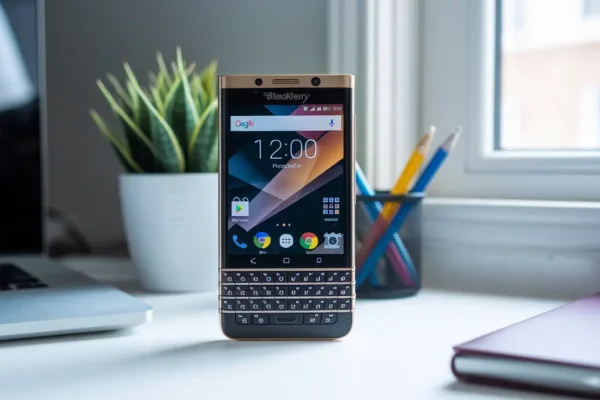
Most BlackBerry owners think support ended on January 4, 2022 — but that’s only half the story.
This guide lays out the real security updates end-of-support timelines for BlackBerry 7.1 and earlier, BlackBerry 10, PlayBook OS 2.1, Android-based Priv and TCL-made KEY series, plus BES/UEM server versions.
We’ll explain the crucial differences between service shutdowns, final firmware patches, licence expiries, and product closures.
Read on to learn which date matters for your device and what to check next.
Key BlackBerry End-of-Life Dates at a Glance
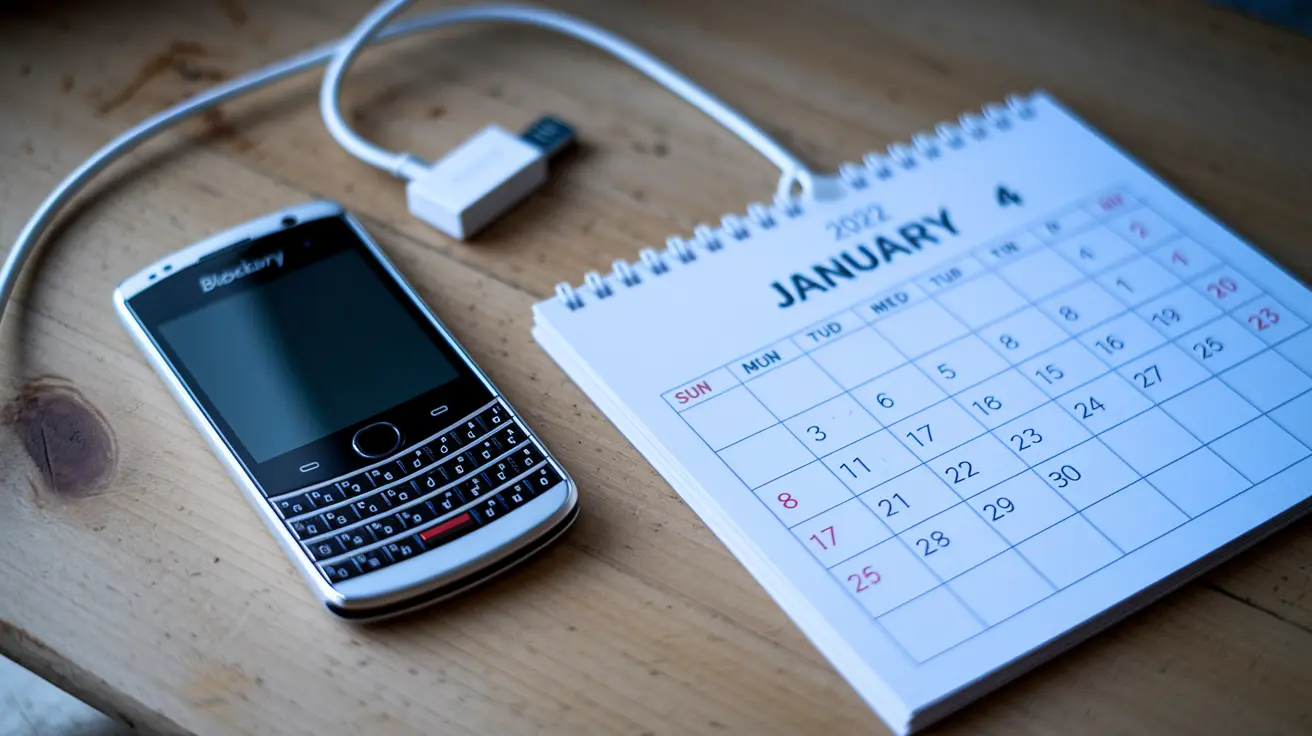
Legacy services for BlackBerry 7.1 and earlier, BlackBerry 10, and BlackBerry PlayBook OS 2.1 and earlier stopped on January 4, 2022. That date matters, but it’s not the whole story.
It marks when BlackBerry switched off the backend infrastructure, the servers and network connections that kept these older devices working for calls, texts, and data. It’s a service shutdown date. Not necessarily the last security patch ever issued for every individual model. Some devices stopped getting firmware updates years before that, while January 2022 applies specifically to the shared backend services these platforms all leaned on.
That distinction matters if you’re doing a risk assessment. A device can lose its final security patch at one point, then lose basic connectivity entirely at a separate, later point. Mix these up and you end up with bad assumptions about what still works and what’s actually protected.
| Product or Service | Devices or Versions Covered | Key Date | Milestone Type | Security Update Status | Important Qualification |
|---|---|---|---|---|---|
| BlackBerry 7.1 and earlier | Bold, Curve, and related BBOS handsets | January 4, 2022 | Service shutdown | No further patches issued | Model-specific firmware support may have ended well before this date |
| BlackBerry 10 | Classic, Passport, Q10, Z10, Z30 | January 4, 2022 | Service shutdown | No further patches issued | Not a universal final-patch date, some builds stopped updating earlier |
| BlackBerry PlayBook OS 2.1 and earlier | PlayBook tablet | January 4, 2022 | Service shutdown | No further patches issued | Tablet-specific OS, separate from phone platforms |
| Consumer BBM | BlackBerry Messenger (consumer) | May 31, 2019 | Product closure | Service fully discontinued | Not the same product as BBM Enterprise |
| BBM Enterprise | Enterprise messaging product | Contract-dependent | Product- and contract-dependent milestone | Varies by agreement | Do not apply the consumer BBM closure date here |
| BlackBerry Priv | Priv (Android-based) | Model-specific, verify separately | Final confirmed security patch | Depends on last issued Android patch | Must be checked against Android patch records, not BB10 dates |
| TCL-made Android phones | KEYone, KEY2, Motion | August 31, 2020 | Licensing event | Not a universal patch cutoff | Marks licence expiry, not confirmed final patch per handset |
| BES and BlackBerry UEM | Enterprise server products | Version-dependent | Version- and contract-dependent milestone | Varies by deployment | Check specific version lifecycle and maintenance contract |
Service termination, product closure, licence expiry, and final patch delivery are four different events. This table treats them that way on purpose. A service shutdown tells you the backend stopped responding. A product closure means the app or feature is gone entirely. A licence expiry tells you who was allowed to manufacture or sell a device, not whether patches kept flowing after that point. And a final patch date is specific to a device model’s actual update history.
If you’re responsible for an Android-based BlackBerry device like the Priv or a TCL-made handset, check the Android security patch level directly on the device. Don’t assume a licence date applies to your patch status. If you manage enterprise BES or UEM deployments, your actual entitlement depends on your contract and installed version, something we’ll get into later in this piece.
How Support Stages Affect BlackBerry Device Functions
(((alt-img2)))
End of support isn’t one single event. It’s a sequence of separate stages, and each one removes something different. Manufacturing support covers whether new units are still being built. Warranty coverage is about hardware replacement and repair. Routine security maintenance is the ongoing release of patches. Technical assistance is the ability to call or contact support for help. Backend service availability is whether the vendor’s servers are still responding to your device. And hardware licensing determines who’s allowed to produce or brand a device at all. These can end at different times, for different reasons.
Keeping a device running involves more moving parts than most people realize. Signed firmware (code that’s been cryptographically approved by the manufacturer) has to be validated before it installs. Carrier approval is often required before an update reaches a specific network. Over-the-air (OTA) systems push the update itself. App infrastructure and authentication services confirm that apps are allowed to run and that accounts can log in. Vendor servers tie all of it together. When any one of these pieces goes dark, the whole chain can break, even if the phone itself still powers on.
Final Words
Services for BlackBerry 7.1 and earlier, BlackBerry 10, and PlayBook OS 2.1 and earlier stopped on January 4, 2022, a service-shutdown date, not a universal final-patch timestamp.
This guide provided a single canonical timeline, separated service shutdowns from licensing and patch milestones, explained how support stages affect device functions, and walked through model checks, risk mitigation, backups, and migration planning.
Check Android patch records and enterprise entitlements, back up and retire unsupported handsets, and use the blackberry security updates end of support timelines as your planning guide, and you’ll be safer and ready to move forward.
FAQ
Q: How long were BlackBerry phones popular?
A: BlackBerry phones were popular for roughly a decade, from the early 2000s through about 2010–2013, dominating enterprise push-email and business use before iPhone and Android pulled consumer attention away.
Q: Does Kim Kardashian still use a BlackBerry?
A: Kim Kardashian is not publicly known to still use a BlackBerry; as of right now she’s primarily seen using modern iPhone or Android devices, with no confirmed recent BlackBerry use.
Q: Is BlackBerry coming back?
A: BlackBerry is not returning as the original handset maker or with BlackBerry OS; BlackBerry Limited now focuses on security and enterprise software, while licensed BlackBerry-branded phones ended under separate licensing timelines.
Q: Why did BlackBerry fail?
A: BlackBerry failed because it was slow to adopt touchscreens and a broad app ecosystem, lost consumer mindshare to iPhone and Android, and compounded the decline with product, licensing, and strategic missteps.