

Ever wondered if your phone could download a movie faster than you brew your morning coffee? Mobile 5G is a total game changer, delivering blazing speeds and super-reliable connections that almost seem futuristic. Imagine swapping a narrow, crowded street for a wide-open highway, that’s how much smoother things work now.
This breakthrough tech gives you lightning-fast data and razor-sharp performance that redefines what you expect from your everyday mobile experience. In this post, we break down what mobile 5G is all about, dive into its clever technology, and show you how it transforms the way your phone keeps you connected.
Understanding Mobile 5G Technology: Definition & Core Principles

5G is the latest evolution in our cellular networks and marks a huge step forward for mobile communications. It builds on what came before by using smart, advanced tech that not only boosts download speeds but also makes connections much more reliable. Imagine your smartphone linked to a network so efficient that it sets the stage for future tech breakthroughs. Ever thought that in the near future downloading a high-definition movie could take less time than making a cup of coffee?
When it comes to performance, 5G blows past 4G LTE by providing lightning-fast data speeds and super low latency. For example, while a movie might take about ten minutes to download on older networks, 5G can finish the job in less than a second. This remarkable improvement is thanks to the latest network enhancements and a robust infrastructure that drastically cuts down delays. Think of it like switching from a crowded side road to a wide open highway where data zooms effortlessly.
The journey of mobile networks is nothing short of amazing. We started with basic voice calls in the days of 1G back in the 1980s, moved to text messages with 2G, stepped into mobile internet with 3G, and hit a milestone with 4G, which made streaming smooth and reliable around 2009. Each upgrade added new layers of connectivity that not only met our growing demands but also reshaped the way we connect with technology every single day.
Mobile 5G Fundamentals: Core Technologies Enabling Ultra-Fast Connectivity
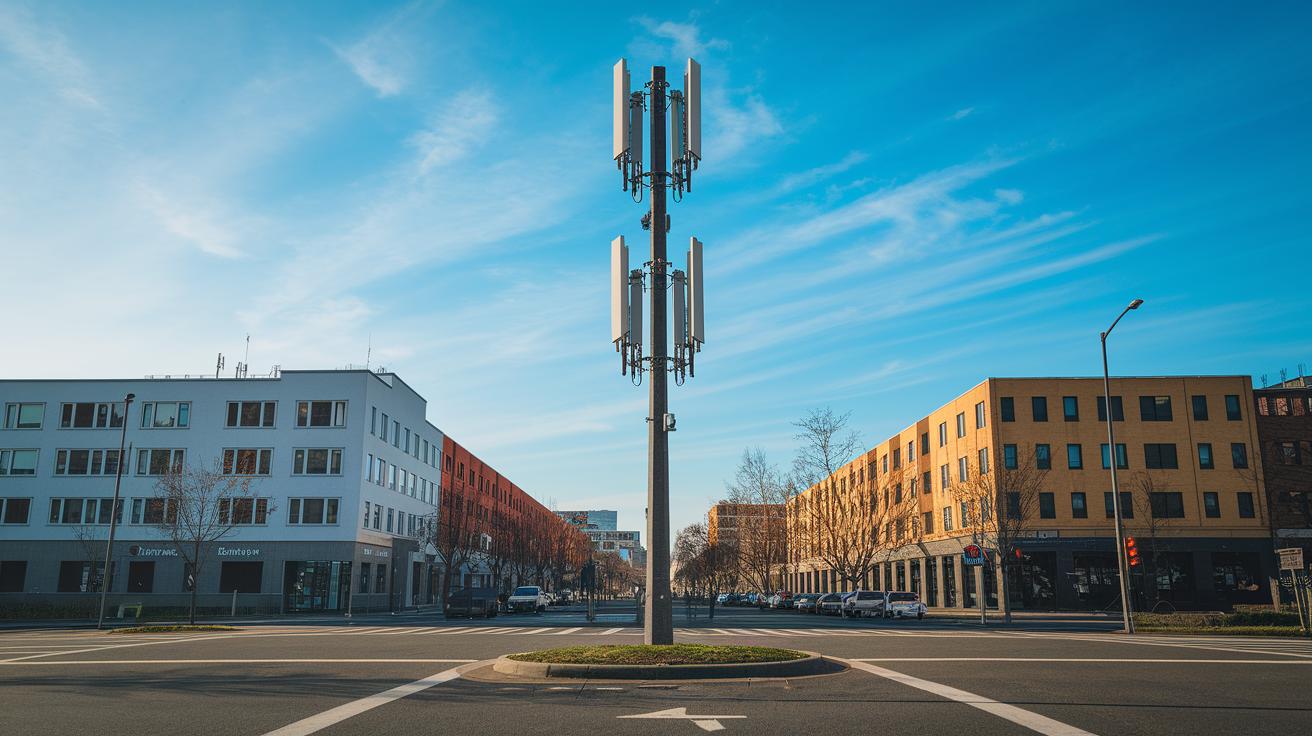
Mobile 5G has completely changed the way we connect by tapping into new radio frequency bands, including millimeter waves (mmWave) and by using more compact base stations. These newer bands take the pressure off the crowded, traditional spectrum, while small cells, little base stations placed about every 250 meters in busy city areas, keep your connection steady, even in the thick of it. And get this: in some cities, these small cells are so cleverly camouflaged on lamp posts and building walls, you’d barely notice they’re there.
The real power of mobile 5G comes from the smart mix of cutting-edge hardware and clever software. Together, they deliver fast, reliable signals, so even in a web of devices and connections, every link gets the smooth, consistent attention it needs.
- mmWave: mmWave taps into higher-frequency bands, opening up extra space for data, easing congestion, and letting you enjoy near-instant downloads.
- Small Cells: These are tiny base stations installed every few hundred meters in dense urban spots, helping manage heavy traffic and maintaining a solid signal where traditional towers might not cut it.
- Massive MIMO: Massive MIMO ramps up the antenna ports from 12 to as many as 100, boosting the network’s capacity so more data flows at once, resulting in smoother user experiences.
- Beamforming: Beamforming channels data along specific paths to reach your device directly, reducing interference and making your connection stronger and clearer.
- Full Duplex: Full duplex lets your device send and receive data at the same time on the same frequency, cutting down delays and making communication more efficient.
Together, these technologies deliver ultra-fast mobile connectivity, giving you blazing speed and rock-solid reliability every time you go online.
Mobile 5G Network Architecture Insights & Infrastructure Development
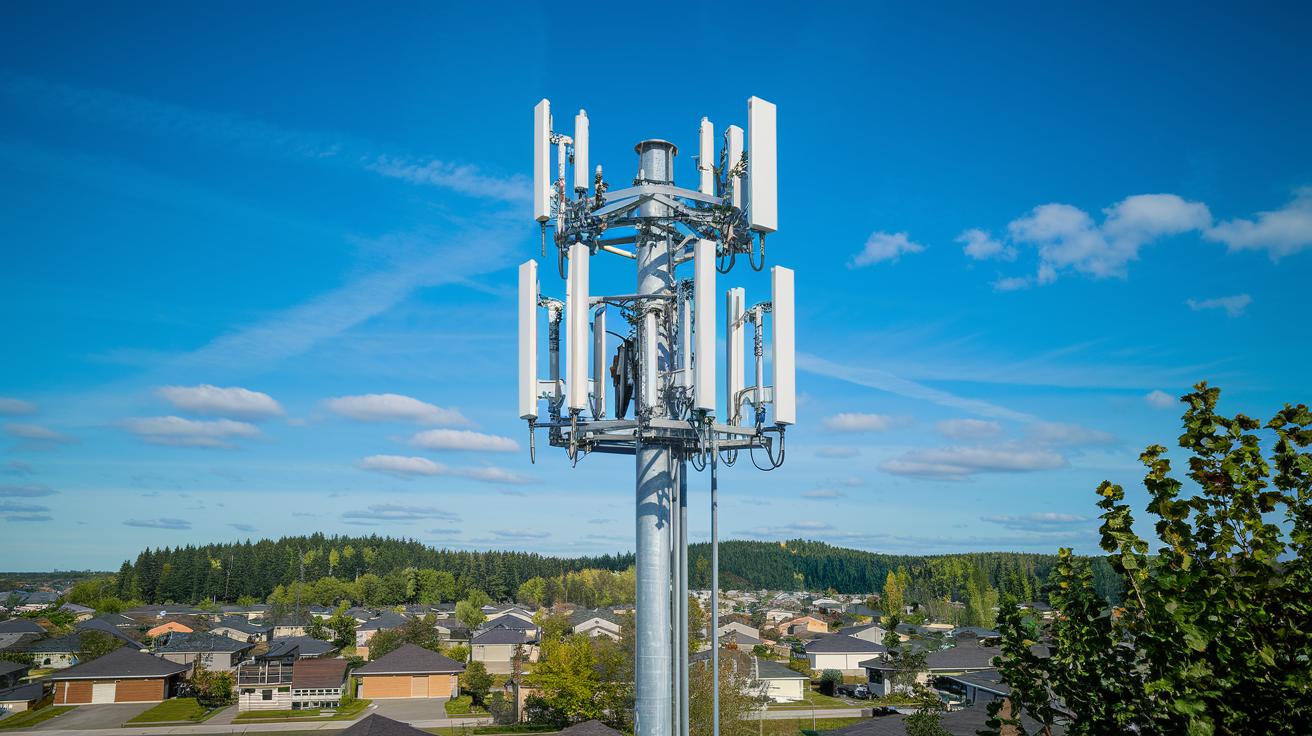
In our modern cities, network providers are placing small cells all around, like seeds scattered over a vibrant field. They mix common sub-6 GHz frequencies with super-fast mmWave signals to give you both wide-ranging coverage and rapid data speeds. Picture these tiny base stations as pit stops along a busy racetrack, keeping everything fueled and running smoothly.
One exciting innovation here is Massive MIMO. This technology uses advanced antenna systems, sometimes packing up to 100 antenna ports in a single base station, to boost network capacity. Paired with beamforming, which directs data precisely where it’s needed, it cuts down on interference, much like a focused spotlight that brightens just the right spot without scattering its light everywhere.
Industry heavyweights like Ericsson, Nokia, Qualcomm, Samsung, Huawei, and ZTE are behind these advancements. By collaborating with global standards groups, they’ve set the core design rules that not only push performance to new heights but also spark friendly competition among carriers. In short, their teamwork has built a network framework ready for continuous innovation and rising user demands.
Of course, expanding the network comes with its challenges. Finding the perfect locations for small cells and navigating local regulations can feel like putting together a giant puzzle in a crowded city. Yet overcoming these hurdles is essential for delivering the fast, reliable connectivity that defines modern 5G technology.
Mobile 5G Performance: Speed Benchmarks, Latency Reduction & Reliability
Mobile 5G can hit stunning speeds of up to 20 Gbps under perfect conditions. Real-world tests, even when networks are packed, show these speeds in action. Imagine grabbing a full high-definition movie in less than a second. That’s 5G turning high-speed mobile connectivity from a theory into your everyday reality.
Latency on 5G networks sits at just 1 to 2 milliseconds. In real-life gaming and video calls, this means you get a super responsive experience. Think about a webpage loading with a crisp snap or video calls that feel almost face-to-face; the tiny delays practically vanish, leaving you with a smooth, immediate connection.
Comparing 5G to the old 4G LTE reveals an amazing leap forward. Where a high-definition movie might take about ten minutes to download on older networks, 5G wraps it up in under one second. It’s like swapping a long wait in line for a speedy fast-track lane, it really makes the difference.
Plus, 5G isn’t just about speed; it’s built for reliability. Field tests confirm that with reduced packet loss and minimal signal dropouts, your connection stays strong even in the busiest settings. Think of it as a finely tuned engine that never lets you down, whether you're streaming your favorite show or placing an important call.
Mobile 5G Technology Explained: Fast and Reliable
The world is quickly jumping on board with 5G, and it’s no wonder. Experts say we’ll see a leap from just 10 million 5G users in 2019 to over 1 billion by 2023. This surge is all about the need for faster, steadier mobile broadband in both crowded cities and quiet rural spots. Investing in robust network setups is turning 5G into more than just a new tool, it's a full-blown mobile broadband revolution.
Everywhere you look, industry experts are putting 5G to the test to see how it can change the way we do business. In Houston, oil and gas teams are using 5G to streamline tough operations, while smart harbors in Germany and China are checking out how this tech can boost port logistics and safety. And in Seoul, smart traffic systems are on deck to make city commutes smoother. Meanwhile, in Estonia, industries are already diving into immersive AR/VR experiences in manufacturing, thanks to the power of 5G.
| Region/Use Case | Year | Key Outcome |
|---|---|---|
| Houston Oil & Gas | 2022 | Boosted operational efficiency |
| Germany Smart Harbor | 2021 | Improved logistics and safety |
| China Smart Harbor | 2021 | Enhanced cargo handling |
| Seoul Smart Traffic | 2020 | Smoother urban mobility |
| Estonia Industrial AR/VR | 2023 | Advanced immersive production processes |
Mobile 5G Technology Benefits: IoT Connectivity & Innovative Use Cases

The boost in performance that 5G brings is paired with breakthrough applications that change everyday life in exciting ways. With its ultra-fast speeds and near-instant responses, 5G not only supercharges mobile performance but also unlocks a whole new world of innovative uses. This powerful new connectivity lets us pack in a huge number of IoT devices, making it crucial for everything from smart-city sensors to industrial automation.
- Autonomous Vehicles – Thanks to 5G's rapid data transfer and almost immediate response times, self-driving cars can make split-second decisions safely on the road. It’s like giving them a high-speed reflex to navigate tricky situations.
- Telemedicine – Imagine doctors performing remote consultations or even surgeries with real-time data exchanges. With ultra-low latency, 5G helps create smoother health care experiences, no matter the distance.
- Industrial Robotics – In manufacturing, 5G’s steady connection means robots can be controlled with pinpoint accuracy. This results in smoother operations and a real boost in productivity.
- Drones – Whether it's for surveillance or delivery, drones now enjoy fast, reliable networks. This means stable, uninterrupted communication with control centers as they carry out critical tasks.
- Smart Cities – In urban settings, 5G supports thousands of sensors working together to improve everything from traffic flow to energy management. It creates a more responsive and efficient city environment.
- AR/VR – For augmented and virtual reality, the blend of high speeds and minimal delays leads to immersive experiences that feel truly lifelike, be it for gaming, training, or remote teamwork.
By combining rapid performance with a solid IoT ecosystem, 5G is reshaping how we interact with technology. Everyday activities are turning into dynamic and connected experiences that feel both fast and dependable.
Future Mobile 5G Technology Explained: Challenges & Next-Level Connectivity Trends
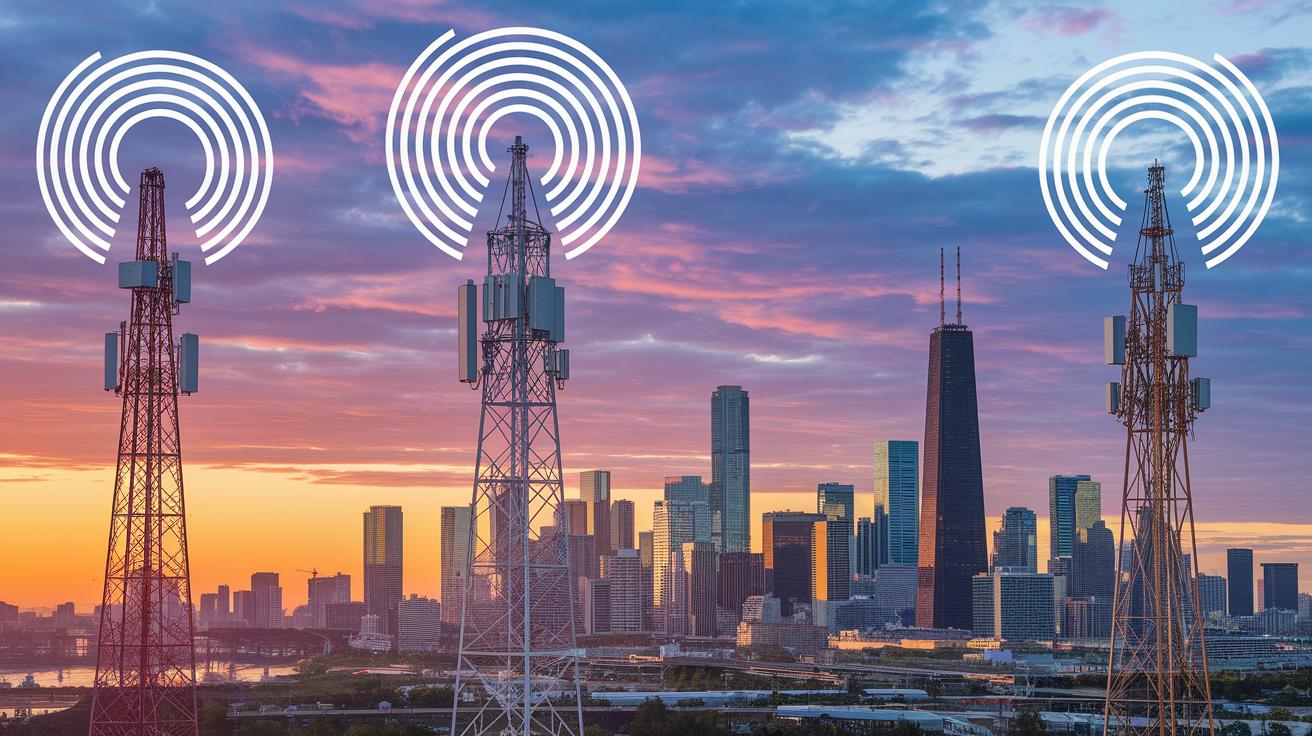
Tech pioneers are pushing cool new ideas like network slicing, which splits a network into several virtual channels, and modular design that gives devices flexibility through different setups. Dynamic spectrum sharing is also making waves, allowing networks to use both new and old frequency bands at the same time without slowing things down. These fresh approaches are laying the groundwork for a digital revolution in telecom and opening up possibilities for next-level wireless apps. It’s not just about boosting speeds, it’s about making telecom smoother and more user-friendly.
But let’s be real: rolling out these advances isn’t a walk in the park. Providers face major hurdles like increasing network density, sorting out spectrum allocation, upholding standards for different systems to talk to each other, and ensuring top-notch security. All this while keeping systems agile enough for super-reliable, low-latency communication, which is crucial for real-time controls. As the industry gears up for solutions that blend 5G with early 6G innovations, cracking these challenges is key to creating a more connected and efficient future in telecom. The road ahead calls for creative strategies and constant teamwork to conquer both technical and regulatory challenges.
Final Words
in the action: we broke down mobile 5g technology explained fundamentals, performance benchmarks, and global rollout patterns. Each section unpacked how ultrafast speeds, low latency, and clever network design power advanced features in our devices.
We also examined key use cases and upcoming challenges, giving a clear picture of today’s tech landscape and what’s ahead. These insights put the power in your hands for smarter decisions and a bright, connected future.
FAQ
Q: What is 5G technology and how does it work in simple terms?
A: The 5G technology is the fifth generation of cellular networks that brings ultra-fast speeds and near real-time response. It operates through new RF bands, dense small cell deployment, and innovations like mmWave and Massive MIMO.
Q: What are the disadvantages or downsides of 5G technology?
A: The downside of 5G includes high infrastructure costs, limited range for higher frequency bands, potential interference in crowded urban areas, and challenges in achieving consistent, global standards.
Q: How do 5G network speeds compare to other connectivity options like WiFi?
A: The 5G network speed easily outpaces many alternatives, offering peak speeds up to 20 Gbps and extremely low latency. This means activities like streaming or downloading large files happen almost instantly.
Q: What distinguishes a 5G phone from a regular phone?
A: A 5G phone is built to connect with the fifth generation network, delivering faster speeds, lower delays, and improved reliability compared to regular phones that rely on older network technologies.
Q: Where can I find additional 5G technology examples or presentation materials?
A: Additional examples and detailed information on 5G are often available in downloadable PDFs or PPTs created by experts, which clearly illustrate practical applications and explain the network’s performance features.